Automatically Verify and Correct the Reference Citations in a Paper

Peer reviewers and journal editors have a new tool to automatically check the references in manuscripts, developed by Jennifer Kleiman at the University of Georgia. You copy the list of references from the manuscript, paste it into the tool’s web page, and it searches the internet for each of the cited works. If it finds the work, then it corrects the reference format as needed to conform to APA style. If it cannot find the work, then it informs you so you can resolve whether the reference is genuine.

I tried out the tool on a manuscript that was recently assigned to me as Associate Editor. The tool is at https://jenkleiman.com/reference-checker/  I copied the list of references page by page from the .pdf of the manuscript and pasted them into the Paste References box on the tool’s web page. In a few cases the tool mistook the last line of a citation for the start of a new one. In all the other cases it found the work the citation referred to. It corrected the format of the citations to comply with APA style, and in several cases it inserted information such as DOI number that had been left out of the reference in the manuscript.

As a further test, I gave the tool some fake citations that I made up. I based the fake citations on correct citations to real works, but changed some of the information such as title or author. In many cases, the tool found the real work that I had based the fake citation on, and showed me a corrected citation that reversed the errors I had inserted. 

But if I made the fake citation different enough from a real one, such as by changing the author and title and leaving out the DOI number, then instead of returning a corrected version the tool labeled the citation as “hallucinated”; that is, the kind of reference to a nonexistent work that an Artificial Intelligence program might make up. Kleiman notes that there is a grey area between a citation that is close enough to matching a real work that is should be corrected, and one that is different enough from any real work that it should be flagged as a hallucination. https://jenkleiman.com/reference-checker/ 

The tool uses an Artificial Intelligence program, which is called Gemini and operated by Google. As Kleiman explains, the tool:

“…uses Gemini 3.0 Pro with search grounding. Instead of just asking ‘is this reference real?’, it performs web searches to verify each citation exists. This mimics how humans do it- we google the paper title, check authors, verify the journal and year, maybe search multiple times to find all the details. The AI does exactly that, but systematically for every reference…search grounding nearly eliminates AI hallucinations. The AI isn’t relying on training data, just what it found on the web.” https://jenkleiman.com/reference-checker/ 

Kleiman does not charge to use her tool, but you need a Gemini API key for Google to run your queries from the tool. The tool’s website includes a link and instructions to get an API key, which is not complicated. You need to give Google a payment method such as a credit card, but when I signed up the API key came with $300 of free usage, so I have not paid anything so far.

As powerful as the tool is, it does not address another problem with references that I have seen as an editor and peer reviewer – citations that point to a work that is real but does not substantiate the assertion that the manuscript cites it for. This still requires human judgement.

Jennifer Kleiman’s tool for verifying and correcting references is very impressive, and I think it should be a routine part of the workflow for evaluating manuscripts that are submitted to journals.


How to Get Published in Peer Reviewed Journals, Even if You’re Not a Professor

My website on how to get published in peer reviewed journals is at https://publishpeerreview.org/  It has the information I wish I knew when I started as a practitioner with no academic connections, and eventually became an author, peer reviewer and Associate Editor for peer reviewed journals.

Reed receives grant for Guerrilla Government

I am honored to receive a 2025 Artists & Scholars Project Grant from the Arts & Humanities Council of Montgomery County. The grant will support my research and writing on Guerrilla Government.

Civil society should develop reference guides for government FOIA workers

David Reed proposed a research idea at the Sunshine Fest conference at Johns Hopkins University, that civil society should develop reference guides for the wokers in government agencies who respond to Freedom of Information requests. The guides would provide workers with the legal justifications and sample language for making the fullest disclosure provided by law. Agencies’ official procedures for Freedom of Information are often “undercontrolling rules” which superficially comply with law but which workers cannot implement because they are vague, contradictory and require actions that management will not accept. The proposal is at https://pubadmin.org/wp-content/uploads/2025/03/sunshine-fest-research-idea-guide-for-foia-responders.pdf 

How to Get Published in Peer-Reviewed Journals

Public Administration practitioners can and should publish in peer reviewed journals. It increases the credibility of their first-hand knowledge, it increases the credibility of the practitioner as an expert, and it adds their experience to the permanent, searchable body of knowledge. It also strengthens the journals by making them more credible and relevant. A webinar on March 5 from the American Society for Public Administration (ASPA) will demystify the process of getting published in peer reviewed journals, and show how to avoid the pitfalls that often confront practitioners as authors. We will also discuss a new initiative by Public Administration Review to involve practitioners. Our speakers are:

* Dr. Annette N. Brown, Chief Strategy and Evidence Officer at FHI 360. Author of “Why should practitioners publish their research in journals?”

* Dr. Ronald Sanders, President and CEO at Publica Virtu LLC. Associate Editor for the Practically Speaking section in the journal Public Administration Review.

* David S. Reed, Founder at Center for Public Administrators. Associate Editor for the journal Public Integrity.

Register for free at https://register.gotowebinar.com/register/5826071759418963549

Reed’s new article in Online Library of Liberty: James Madison made the case for Guerrilla Government

James Madison proposed the radical idea that individuals working in subordinate offices of the government should be “sentinel over the public rights” rather than just obeying their superiors. What convinced him of that? He had been involved in the nascent nation’s first whistleblower scandal. David Reed’s new article in Online Library of Liberty tells the story. https://oll.libertyfund.org/reading-room/2023-11-20-reed-madison-disobedience-public-interest

Whistle Polishing: A New Strategy for Guerrilla Government

My proposal has been accepted to present Whistle Polishing: A New Strategy for Guerrilla Government, at NECoPA 2023. I’m looking forward to a great conference. https://northeastpublicadmin.org/

A Teaching Case for your Fall Syllabus

If you will be teaching Innovation, Open Government, or Civic Activism in the fall, consider our teaching case on Independent Demonstration Projects, published in JPAE at https://www.tandfonline.com/doi/abs/10.1080/15236803.2023.2188150?journalCode=upae20 
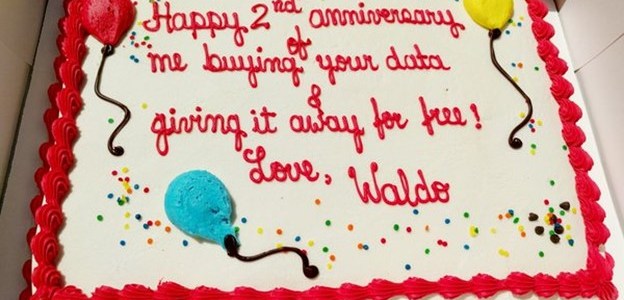
It’s serious and also fun, featuring the “passive-aggressive sheet cake” pictured here. We also have free class slides—just ask.

Grant from Arts & Humanities Council of Montgomery County

I am grateful to have received a grant from the Arts & Humanities Council of Montgomery County. The grant supports our ongoing research, writing and teaching to strengthen the role of public sector workers in democratic checks and balances.

Independent Demonstration Projects presentation at National Academy of Public Administration, Social Equity Leadership Conference

I presented a teaching case on Independent Demonstration Projects at the National Academy of Public Administration (NAPA) Social Equity Leadership Conference on June 10, 2022. NAPA will post a video of the presentation, but in the meantime my slides are at social-equity-leadership-conference-.pdf